Fleet electrification: what’s working, what isn’t?
The webinar Fleet electrification: what’s working, what isn’t? brought together senior voices from across the logistics ecosystem to examine how operators, infrastructure providers, financiers and policymakers are navigating the realities of decarbonising road freight. Hosted by broadcaster Juliette Foster, the session explored what’s genuinely working on the ground, where the biggest hurdles still lie, and what needs to change for electrification to scale at pace.
Understanding the Reality: What’s Working Today — and What Isn’t
The discussion opened with a candid stocktake of the UK’s electrification progress. Although almost every major fleet has now published a decarbonisation target, the operational reality is far more complex.
Panellists highlighted that electric vehicles are already delivering strong performance in certain duty cycles — particularly predictable urban routes and short‑range delivery operations. However, they also noted that commercial viability remains uneven, with payload constraints, charging downtime, and depot readiness still limiting adoption in more demanding segments.
A key theme emerged: decarbonisation is inevitable, but the tipping point varies by fleet type. Operators are moving from experimentation to scale only when the financial, operational and infrastructure conditions align. The panel stressed that electrification is not simply a cost centre — for some operators it is becoming a competitive differentiator, though customer willingness to pay a premium for zero‑emission delivery remains inconsistent across the market.
Power, Infrastructure and the Economics of Scaling
The conversation then shifted to the factors that ultimately determine the pace of electrification: grid capacity, depot infrastructure, and funding models.
Speakers emphasised that grid connections remain one of the biggest sources of delay, with many operators over‑sizing their capacity needs and absorbing unnecessary costs. Right‑sizing connections based on real duty cycles was identified as a critical early step.
Where energisation dates stretch years into the future, the panel explored practical workarounds — including battery buffering, smart charging strategies, and shared depot infrastructure. These solutions can bridge the gap, but they require careful planning to ensure they scale beyond pilot projects.
Panellists also shared lessons from working with Distribution Network Operators (DNOs), noting that early engagement, clear load forecasting, and realistic timelines are essential for avoiding costly missteps.
On public charging for trucks, the panel agreed that the UK is still at the early stages. Large‑scale en-route charging will require coordinated investment, land availability, and a clear commercial model before it becomes viable.
Finally, the question of who should own the charging asset — operator, energy provider or third party — was identified as a major determinant of long‑term economics, especially for mid‑sized fleets.
Getting Electrification Right: Decisions That Shape the Next Decade
Before moving to audience questions, the panel turned to practical guidance for operators planning their next steps.
Speakers shared the hardest and most unexpected hurdles they had faced — from infrastructure delays to evolving vehicle specifications — as well as the areas that proved easier than anticipated once the right partners were in place.
A central message emerged: decisions made today will be lived with for a decade. Operators must avoid locking themselves into infrastructure that cannot scale or adapt. For fleets not yet ready for full electrification, the advice was clear: start preparing now. Data collection, route analysis, energy modelling and early engagement with landlords and DNOs can all be done ahead of vehicle procurement.
The panel closed this section by identifying the single biggest system‑level change needed to accelerate progress — whether from government, energy providers, manufacturers, landlords or operators. The consensus: electrification must shift from organisation‑by‑organisation effort to coordinated, cross‑industry action.
Audience Q&A
The session concluded with a lively audience Q&A, covering practical challenges such as depot design, financing models, vehicle availability, and how operators can future‑proof their infrastructure against evolving technology.
Participants were encouraged to share feedback via the webinar platform and to continue engaging with Leaders in Logistics for further insights.
Closing Remarks
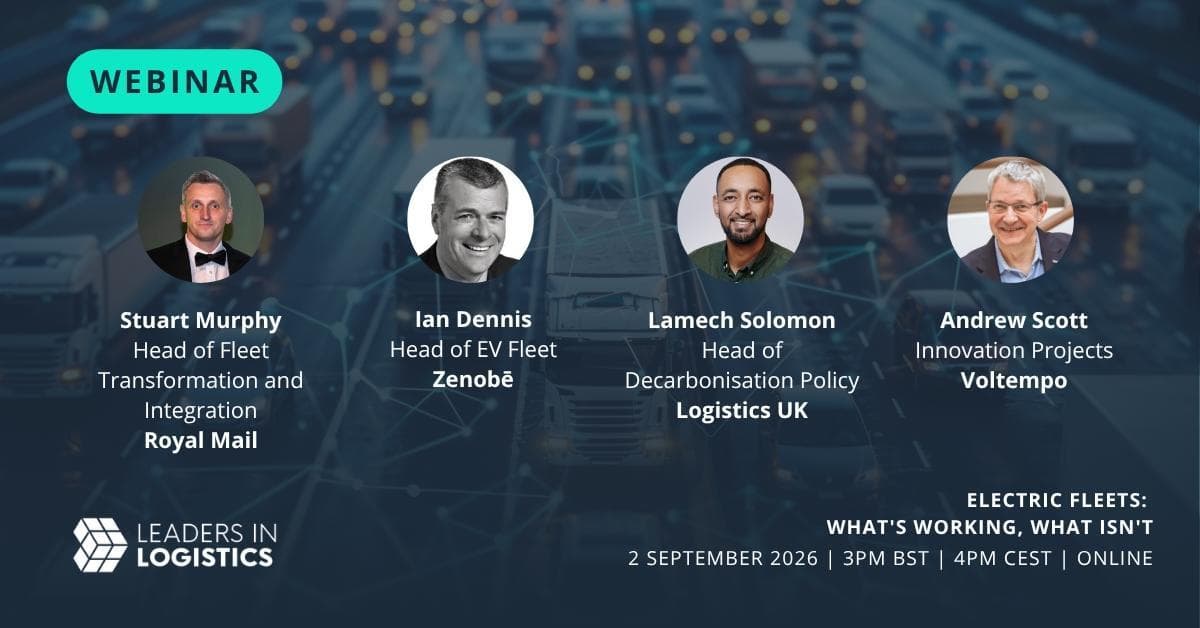
Juliette closed the webinar by thanking panellists Stuart Murphy (Royal Mail), Ian Dennis (Zenobē), Lamech Solomon (Logistics UK) and Andrew Scott (Voltempo) for their openness and expertise. She encouraged attendees to join upcoming Leaders in Logistics events — including the major retail logistics conference in London this autumn and the flagship European Summit in Amsterdam next spring.
The session offered operators a clearer, more practical understanding of where fleet electrification is working, where it isn’t, and what steps they can take now to move forward with confidence.