She has won some of acting’s highest honours including an Oscar, two Golden Globes, ten BAFTAs, and a record-breaking eight Oliviers. Not bad for legendary actress and all-round national treasure Dame Judi Dench, who openly admits to suffering from stage fright. She’s not the only one who gets the jitters. Dame Eileen Atkins once described first nights as “complete and utter miseries”, while US actor Morgan Freeman has ruled out ever returning to the theatre after a bad case of the collywobbles triggered a major memory lapse. If the giants of stage, screen, and TV struggle with nerves, then what hope is there for the rest of us?
Stage fright is an occupational hazard for every actor, but some have learned to channel that anxiety into delivering the performances of their lives. How do they do it – and can the rest of us use those same techniques to speak well in public or handle interviews? The short answer is yes. Nerves can be conquered with the right set of tools. And the good news? They’re available to all of us.
1. Breathing: The Oldest, Simplest, Most Overlooked Tool
Before a performance, actors often rely on controlled breathing to steady their bodies and minds. It’s the same principle used in yoga, meditation, and even childbirth preparation: slow, intentional breaths signal to the nervous system that you’re safe and not under threat. Controlled breathing increases oxygen flow to the brain, calming the body’s response to stress while sharpening mental clarity.
For anyone facing the ordeal of a job interview, a presentation, or a panel, it’s the quickest way to reclaim control. A few deep, structured breaths can shift your physiology from panic to presence. Nobody is suggesting these techniques will work from day one, but the more often you practice them the easier they’ll get and before you know it, they’ll become instinctive.
2. The Alter Ego: A Surprisingly Practical Strategy

“We meet ourselves time and again in a thousand disguises on the path of life” (Carl Gustav Jung 1875 – 1961)
What is life without an alter ego, that alternative character familiar to performers and their fans? Sasha Carter – a mash up of Beyonce and June Carter – is the alter ego of singer Adele, while Beyonce Knowles channels her alternative self through Sasha Fierce. Alice Cooper is the theatrical alter ego of Vincent Fournier who – off stage – likes nothing better than a quiet round of golf, worlds apart from his wild man persona.
This isn’t escapism – it’s strategy. By defining how that persona behaves, moves, and commands the attention of an audience, their owners have created a psychological buffer between their private selves and the public moment. The alter ego is the one who performs, while the real person stays protected.
Non-performers can adapt the concept. First of all, you don’t need a stage name, a sequined bodysuit, or even a good singing voice. Craft a version of yourself, the person you want to be, the one who can handle pressure with confidence, and who delivers memorable one-liners. Step into that role when the moment calls for it, and don’t look back. Roll with it and embrace every second.
Everyone has an alter ego – including me – and although mine doesn’t have a name, she approaches each assignment with assurance, professionalism, and a certain amount of humour. We have quite a few things in common although modesty prevents me from revealing what they are
3. Training the Mind: From Rehearsal to Hypnotherapy
Actors don’t just rehearse the lines of a play they also immerse themselves in the emotional side of the character they’re playing. That means entering states of focus, calm, and intensity on a director’s cue. Presenting an emotion on demand does feel like a big ask, which is why some performers use hypnotherapy or even guided visualisation to reinforce those mental pathways.
Guided visualisation may sound like a bit of a mouthful but in reality, it is straightforward. In a nutshell, it’s a way of rehearsing a moment before it happens. Many athletes use it to steady their nerves and sharpen their focus. Imagine the stress of performing in a stadium full of spectators and before a TV audience of millions. There are no second takes, just pure, unbridled tension where the expectations of family, friends, and a nation are riding on a pair of shoulders. Visualisation is the tool that manages the pressure, clears the emotional blockages, and confronts a moment with a sense of control that doesn’t rely on luck or chance. Techniques like this sit on the same spectrum as hypnotherapy, which uses similar mental rehearsals to make high-pressure moments feel less intimidating.
Hypnotherapy might sound like a leap into the unknown, but its value lies in something more practical: it helps people interrupt the automatic fear response. Instead of letting nerves take over, hypnotherapy creates a calmer baseline so the body doesn’t go straight into fight-or-flight the moment the pressure rises. Some performers have used it for that very reason: Sylvester Stallone used hypnotherapy during the making of Rocky to steady himself and stay focused under pressure. For many people, hypnotherapy is a structured way to reset their internal script and approach high-stakes moments with a clear head.
4. Borrowing the Best of the Craft
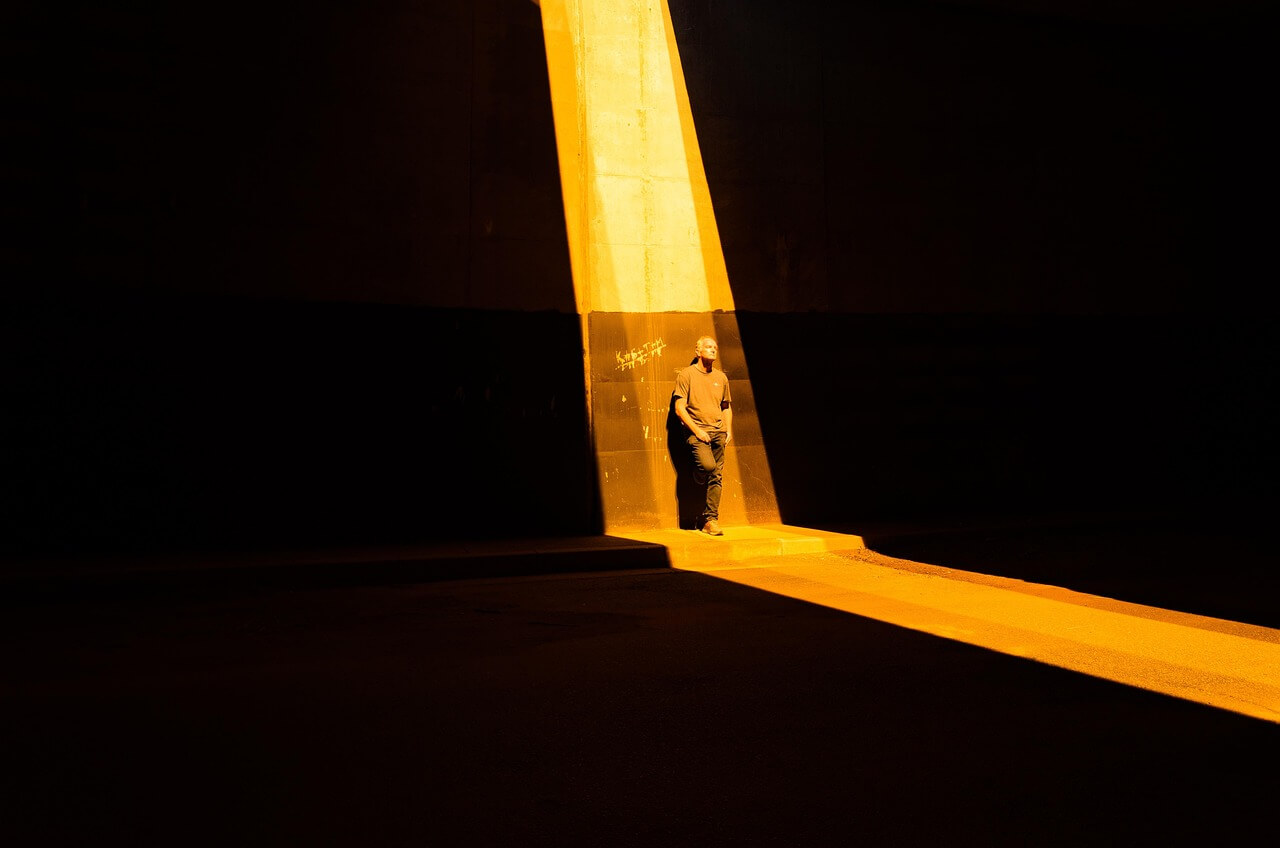
“Do not go where the path may lead; go instead where there is no path and leave a trail.”
Ralph Waldo Emerson (1803 – 1882)
None of these techniques require a stage, a spotlight, or an audience of thousands. They’re simple ways of managing the body, the mind, and the story you tell yourself before you step into the spotlight. Actors aren’t fearless — they’re trained to look that way. With time and a little adaptation, we can use their methods to approach interviews and presentations with confidence and a clearer sense of who we want to be. Remember, the spotlight isn’t a threat, it’s an invitation that will always be ours to claim.